

Environmental Gamification: How to Drive Sustainability Adoption and Measure Impact
Most organizations recognize that sustainability matters. The harder challenge is adoption.
Employees need clear actions, practical motivation, and ongoing feedback to turn sustainability goals into daily behaviors. Without those elements, even well-funded ESG and CSR programs can struggle to gain traction.
Environmental gamification helps close that gap. By turning sustainability into a structured system of participation, incentives, recognition, and measurable outcomes, gamification makes it easier for employees to engage – and easier for organizations to track progress.
JouleBug helps companies use gamified sustainability programming to activate employees and stakeholders, build capabilities, and translate everyday actions into measurable environmental and business impact.
Why Sustainability Programs Struggle With Adoption
Sustainability programs often fall short because awareness alone does not change behavior. Unlike marketing a product or service, behavior change requires more than the old “see something seven times before you act” idea. Employees may understand company goals, but they still need specific actions, simple participation paths, and reinforcement that helps new habits stick. Effective sustainability adoption requires structure, motivation, and measurable feedback.
Many organizations are strong at communicating sustainability priorities. The breakdown usually happens in the “what’s next” phase. Employees hear about emissions reduction, waste diversion, energy efficiency, or responsible operations, but they may not know which actions matter most or, more importantly, how their individual efforts connect to enterprise goals. If individuals don’t see themselves as part of the solution, they are less likely to own the results.
Three barriers commonly limit adoption:
- Lack of clarity: Employees do not know which sustainability actions have the greatest impact.
- Convenience and friction: Sustainable choices can feel disruptive, time-consuming, or separate from daily work.
- Behavioral inertia: Without positive reinforcement, existing habits remain unchanged.
These barriers are common in change management, but they are also addressable.
Programs that rely only on messaging rarely sustain participation. Organizations need engagement systems that guide behavior, reinforce progress, and make sustainability visible across teams and locations.
How Does Gamification Improve Sustainability Adoption?
Gamification improves sustainability adoption by making sustainable behaviors clear, rewarding, social, and trackable. It turns corporate sustainability goals into everyday actions employees can complete, share, and measure. This approach supports behavior change while giving organizations better visibility into participation and environmental impact.
In practice, environmental gamification connects employee actions to goals such as carbon reduction, waste diversion, energy efficiency, water savings, responsible purchasing, and sustainable commuting. Instead of asking employees to support broad sustainability priorities, companies can guide them toward specific, repeatable behaviors.
Gamification works because it taps into achievement, recognition, social connection, and progress. Points, badges, team challenges, and leaderboards make participation more engaging. Public recognition helps employees see that their contributions matter. Time-bound challenges create urgency and make sustainability feel active rather than abstract.
Core Mechanics That Drive Adoption
The strongest gamified sustainability programs support a behavior change lifecycle: Awareness > Action > Reinforcement > Habit Formation.
Common mechanics include:
- Points and progress tracking that show movement over time
- Leaderboards and social proof that increase visibility
- Team-based challenges that create shared accountability
- Badges and achievements that recognize participation
- Rewards and incentives that reinforce eco-friendly behavior
These mechanics help employees understand what to do, why it matters, and how their actions contribute to a broader result. Over time, repeated participation can turn one-time actions into lasting habits.
Organizational Benefits of Gamified Sustainability
Gamified sustainability programs do more than increase participation. They help organizations make sustainability more practical, measurable, and scalable.
When sustainability is built into daily work through mobile engagement, challenges, and recognition, employees are more likely to participate consistently. They are more likely to view “sustainability tasks” as part of their role, not confined to a few people or a single department. Teams can rally around shared goals, managers can see adoption patterns, and sustainability leaders can connect engagement to ESG and CSR outcomes.
For companies managing programs across multiple sites, business units, suppliers, or stakeholder groups, gamification also creates a consistent engagement layer. It helps translate strategy into action while reducing the administrative burden of running disconnected campaigns.
Impact on Workforce Transformation
Gamification supports workforce transformation by building sustainability knowledge through repeated action. It encourages cross-team collaboration, strengthens purpose-driven culture, and creates a channel for employee-led ideas.
The result is a more active sustainability culture. Employees are not only receiving information from leadership; they are participating in change, seeing progress, and contributing to measurable outcomes.
Interested in real-world results? See how CEMEX united a global workforce for climate action using the JouleBug White Label solution.
How Do Rewards Drive Sustainability Behavior Change?
Rewards drive sustainability behavior change by reinforcing the actions organizations want to see repeated. When rewards are aligned with sustainability goals, they can increase participation, encourage early adoption, and help employees build long-term habits that support ESG, CSR, and operational objectives.
Recognition is especially important at the start of a program, when employees are learning new behaviors. A reward does not need to be large to be effective. Points, badges, public recognition, team milestones, sponsored incentives, and charitable donations can all make participation feel meaningful.
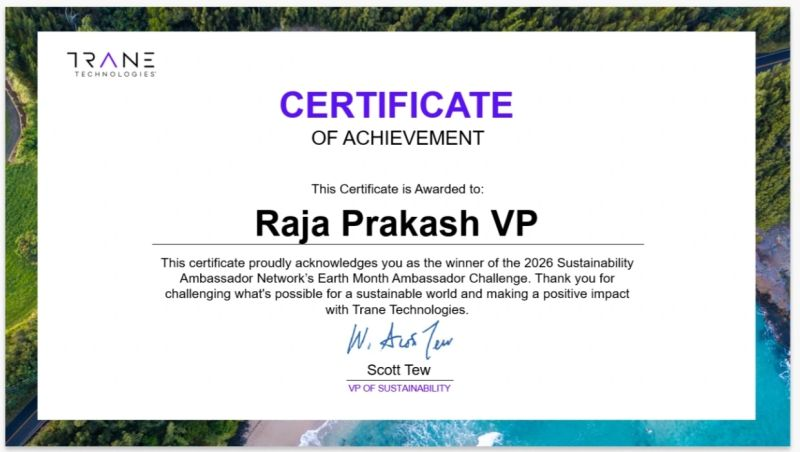
One effective reward is an official company-branded certificate recognizing an individual or team for their contributions to impact reductions, which they can share publicly with their network. Keep it simple. Make it impactful. Make it memorable and shareable (when possible).
Why Rewards Matter in Change Management
Rewards help shift sustainability from a mandate to a shared experience. Employees are more likely to engage when they see that their actions are noticed, valued, and connected to real outcomes.
Effective rewards strategies often combine intrinsic and extrinsic motivation.
- Intrinsic motivation comes from purpose, pride, and contribution.
- Extrinsic motivation comes from incentives, recognition, or competition.
Together, they help reinforce participation while keeping the program connected to company values.
Rewards also create momentum. When employees see peers earning recognition or teams advancing on a leaderboard, sustainability becomes more visible and social. That visibility encourages broader participation and helps normalize sustainable behaviors across the organization.
How to Turn Sustainability Behaviors Into Measurable Impact
Turning sustainability behaviors into measurable impact requires tracking systems that capture participation and translate actions into outcomes such as carbon reduction, water savings, energy conservation, and waste diversion. Measurement connects employee engagement to business value, reporting needs, and continuous program improvement.
Without measurement, sustainability programs can become anecdotal. Leaders may know that employees participated, but they may not know which actions worked, which teams were most engaged, or which behaviors produced the strongest impact.
With the right sustainability engagement platform, organizations can move from activity tracking to impact reporting. That matters for ESG and CSR reporting, audit readiness, internal communications, operational planning, and executive decision-making.
Why Measurement Matters
Measurement helps sustainability leaders demonstrate progress and prioritize what works. It supports more credible reporting, identifies high-impact behaviors, and links employee engagement to operational efficiency, cost savings, and risk reduction.
It also helps teams improve over time. Participation data can reveal which campaigns resonate, which sites need more support, and which actions should be scaled across the organization.
What to Measure
Key metrics include:
- Participation rates across teams, locations, and stakeholder groups
- Actions completed within campaigns and challenges
- Frequency and consistency of sustainable behaviors
- Estimated environmental impact, including CO₂, water, waste, and energy metrics
- Engagement trends over time
- Rewards redeemed, milestones achieved, and recognition activity
These metrics help organizations quantify adoption and show how individual actions contribute to larger sustainability goals.
Want to see how gamification can deliver measurable outcomes? Request a demo of JouleBug and see the impact for yourself.
Why Gamifying Sustainability Improves Talent Retention and Innovation
Gamified sustainability programs can strengthen employee engagement, retention, and innovation by connecting people to purpose. When employees are invited to participate in sustainability goals, they are more likely to feel involved in the company’s direction and more motivated to contribute ideas.
Employees increasingly expect companies to act on sustainability in credible, practical ways. Gamification helps turn that expectation into participation. It gives employees a clear role in the organization’s progress and creates opportunities for collaboration across departments, locations, and functions.
This can improve culture as well as performance. Employees who feel connected to a company’s purpose are more likely to stay engaged, contribute ideas, and support change. Sustainability becomes more than a compliance requirement. It becomes a shared driver of culture, innovation, and business resilience.
What Is a Sustainability Engagement Platform?
A sustainability engagement platform helps organizations gamify sustainability, track behaviors, reward participation, and measure impact across employees and stakeholders. It brings campaigns, engagement, incentives, and reporting into one scalable system, making sustainability adoption easier to manage and easier to measure.
Connect Strategy, Advisory Support, and Employee Engagement
For mid-market and enterprise organizations, a platform approach is especially valuable. Sustainability teams often need to activate many groups at once, including employees, stores, suppliers, partners, customers, or communities. A centralized engagement platform helps create consistency while still allowing programs to be tailored by audience, location, or goal.
But what if your company knows something needs to be done but you don’t know how to get started? That’s where the broader Clearyst ecosystem comes into play.
How Clearyst Advisory Supports Sustainability Engagement Strategy
A company may have a long list of possible initiatives, but if leadership has not prioritized them, teams can waste time on low-impact work. Clearyst Advisory helps companies clarify strategy, priorities, and engagement fit. This guidance supports decisions on which knowledge gaps to close first, how to align sustainability efforts with customer and regulatory expectations, and when to activate teams across departments and regions. Our approach lets us understand a company’s current status and goals to design effective engagement strategies.
How Green Business Benchmark Supports Sustainability Engagement Readiness
A company may strongly desire to act on sustainability, but without a clear view of its current efforts, gaps, and key proof points, it cannot guide employees on how to engage effectively.
Green Business Benchmark helps companies build that foundation. It supports GBB certification, but its value goes beyond one credential. Used well, it can help businesses prepare for other green certifications, customer sustainability requests, reporting frameworks, and broader sustainability assessments. GBB gives companies a way to connect those goals to actual work. Teams can benchmark where they stand, prioritize the most relevant actions, and track progress over time.
Customization at Every Level
With JouleBug, organizations can customize sustainability challenges to reflect their brand, goals, and audience. Teams can tailor actions, imagery, challenge titles, icons, descriptions, campaign dates, incentives, and prizes.
The platform also supports educational content, including links and videos that provide additional context. As programs evolve, teams can refine challenges, update actions, and adapt the experience based on engagement data and organizational priorities.
JouleBug also offers flexible support services, including custom action development, content review, impact calculation support, branded engagement materials, post-challenge analytics, leaderboard updates, and marketing templates. This helps organizations launch programs that are engaging, credible, and aligned with their sustainability strategy.
Key Capabilities
Sustainability engagement platforms like JouleBug support:
- Gamified challenges and campaigns
- Mobile-first employee and stakeholder engagement
- Action tracking and impact measurement
- Rewards, recognition, and incentive systems
- ESG and CSR reporting dashboards
- Engagement across employees, partners, suppliers, and communities
These capabilities help sustainability leaders move from strategy to execution with less friction and more measurable results.
Business Outcomes
The business value of a sustainability engagement platform includes scalable adoption, reduced administrative burden, stronger employee engagement, and clearer sustainability performance data.
JouleBug, part of the Clearyst ecosystem, helps organizations turn sustainability programs into trackable experiences that motivate, recognize, and reward sustainable actions at work and beyond. The platform supports:
- End-to-end sustainability execution: Set goals, engage stakeholders, and track impact.
- Stronger participation: Run gamified challenges and incentives that support sustainability goals and company culture.
- Measurable outcomes: Show how stakeholder actions contribute to carbon, water, waste, and energy targets.
- Scalable engagement: Activate sustainability initiatives across employees, stores, supply chain partners, and customer groups.
- Advisory-backed implementation: Use Clearyst’s sustainability expertise to shape an engagement strategy that fits your goals.
Together, these capabilities create a complete approach. Advisory clarifies the path. Engagement encourages participation. Benchmarking tracks and documents progress.
How to Implement a Gamified Sustainability Program with JouleBug
A successful gamified sustainability program starts with focused goals, clear behaviors, meaningful incentives, and reliable tracking. JouleBug helps organizations launch structured campaigns, engage stakeholders, measure results, and scale the sustainability actions that create the greatest impact.
- Step 1. Define target behaviors: Focus on high-impact actions that are simple, specific, and repeatable. Choose behaviors that align with your ESG, CSR, operational, or compliance priorities.
- Step 2. Design incentives and rewards: Align rewards with the behaviors you want to reinforce. Balance intrinsic motivation, such as purpose and recognition, with extrinsic incentives such as points, prizes, donations, or team achievements.
- Step 3. Launch challenges: Use time-bound campaigns to create momentum. Encourage team participation, communicate clearly, and make it easy for employees and stakeholders to take action.
- Step 4. Track and optimize: Monitor participation, impact, and engagement trends. Use data to identify what works, refine future campaigns, and scale successful behaviors across the organization.
As sustainability programs move beyond reporting and compliance, companies need integrated solutions that drive stakeholder alignment, measurable engagement, and lasting behavior change. JouleBug, supported by Clearyst’s advisory expertise, combines mobile engagement, program management, data intelligence, and sustainability strategy to help organizations activate their people and value chain.
Ready to elevate your sustainability program? Contact our team to learn how JouleBug can help you drive sustainability adoption and measure impact.